Compute beyond
the device.
We believe the future will run on networks of shared compute.
AI is moving into drones, humanoids and the devices we wear. The models behind these devices need memory and processing power, but the hardware has to fit inside something that can fly, move or sit comfortably on a person’s body.
A robot has to understand what its cameras see, plan its next action and control its movement. These systems run together and compete for compute. Adding a larger GPU may let it run a larger model, but that GPU draws from the same battery as the motors. It adds weight and produces heat that the robot has to remove.
Smart glasses, rings and AI pins have even less room for processors, memory, batteries and cooling. Sending work to a phone helps until the phone becomes the limit. Running a model in the background still uses its memory, processor and battery.
Microsoft Research and UC Berkeley measured the problem in mobile robots. Smaller GPUs couldn’t fit the full set of models they tested. Larger onboard GPUs shortened battery life. Running models on another machine helped, but network delay reduced task accuracy. Their conclusion was that robots need a platform that can place work across the robot, nearby computers and the cloud.[1]
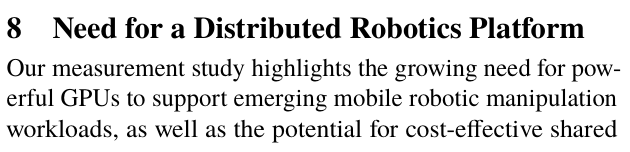
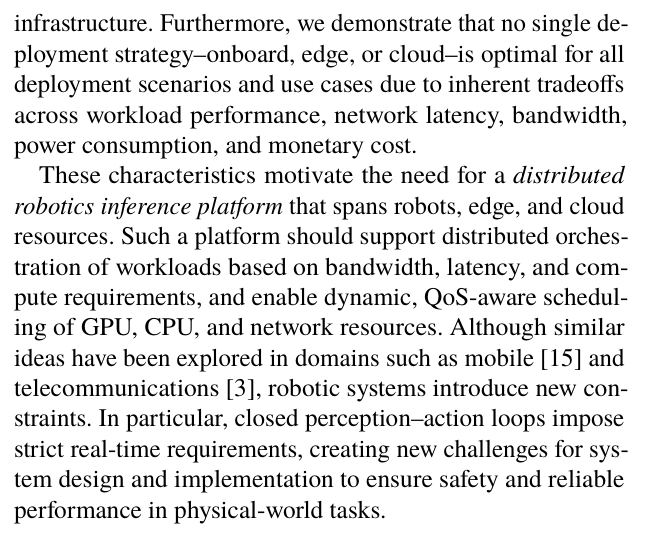
The choice depends on the task. A robot needs a prediction in time to act on it, and sending camera data takes bandwidth. In some manipulation tests, tens of milliseconds of extra delay reduced accuracy by more than 10%. The platform has to account for these costs when it assigns CPU, GPU and network resources.[1]
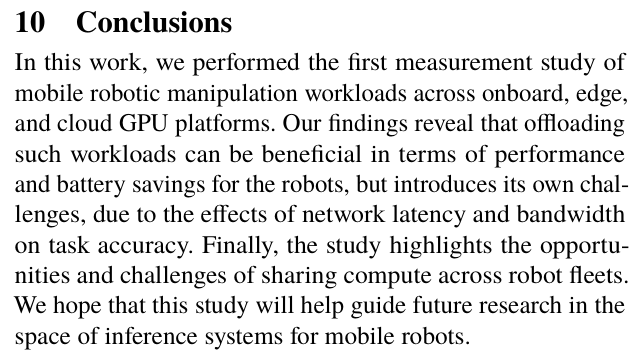
Putting all the compute on the device runs into its physical limits. Sending everything to a data center depends on a fast, reliable connection. A nearby server can help, but a moving fleet may leave its coverage. We think devices need access to several sources of compute, with software that chooses what to use for each workload.
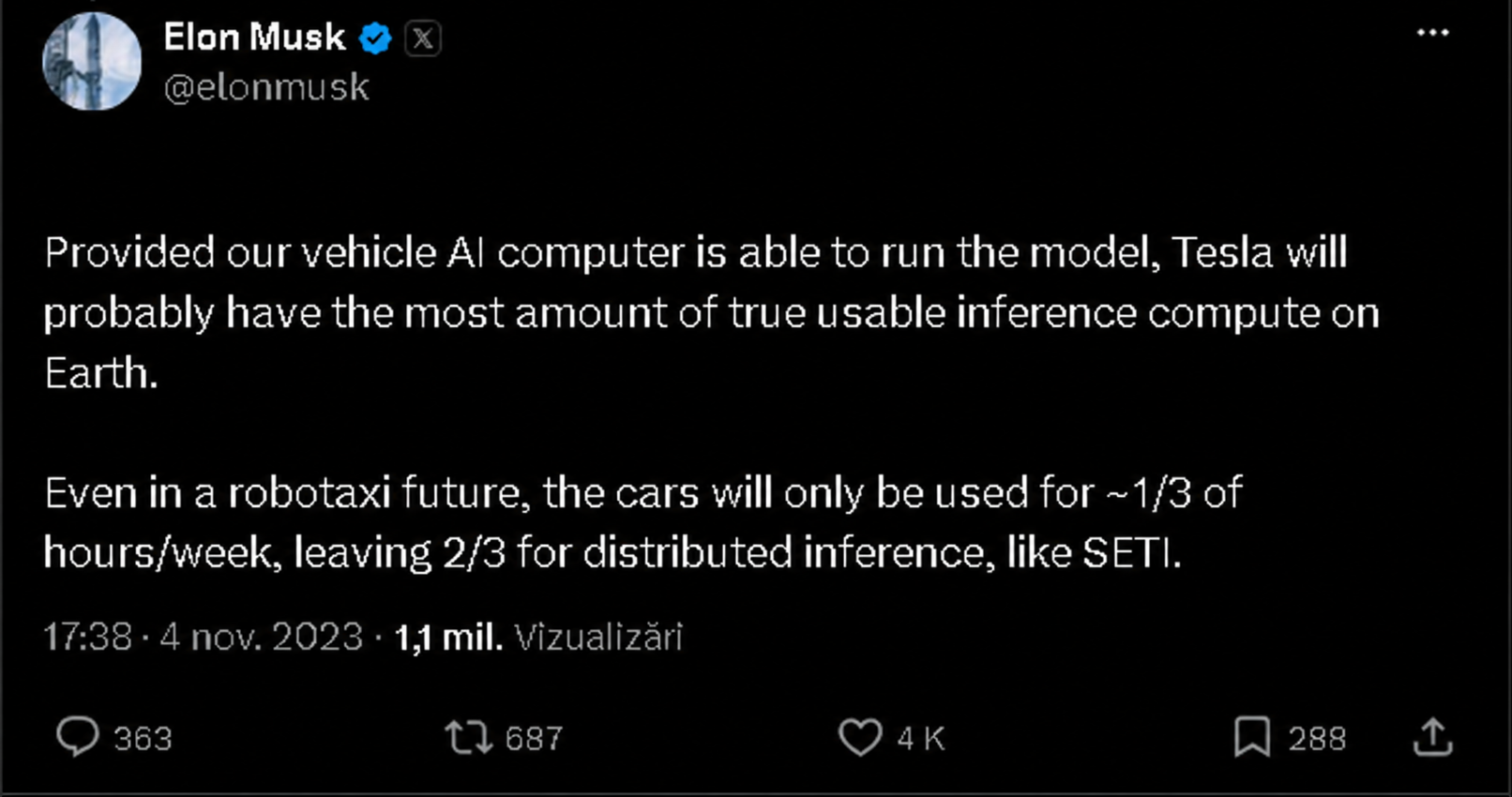
Some of that capacity is already in devices people own. In 2023, Elon Musk proposed using Tesla computers for AI inference while the cars were idle, provided they could run the model. He estimated that even robotaxis could have roughly two-thirds of the week available for distributed inference.[2]
For personal computers, the limit is often what the owner can afford. Too little RAM or GPU memory can stop a scene or language model from loading. A weak CPU or GPU can turn a render or simulation into hours of waiting. Upgrading one computer costs money, while another machine nearby may have the resources it needs.
A desktop bought for occasional rendering can have a free GPU while someone else’s laptop is struggling with a scene. The same is true of spare CPU time and memory. If the work can be moved or divided, those resources can help another device without its owner buying new hardware.
We started Seamless after running into this with our own low-spec laptops. Games wouldn’t run and Blender renders took too long. We wanted one laptop to use the other’s spare resources while we kept working in our local applications.
We’re building Seamless to make that a two-click connection. You connect to a friend’s computer and use or lend resources. For supported applications, work is sent to the connected machine and the results return to the app on your own computer.
This needs more than a connection between two machines. Seamless has to divide and place work according to the memory, processors and connection available. Offloading speeds up an app only when computation and data transfer together take less time than doing the work locally. Rendering, simulations, AI models and games each need their own integration, with much tighter timing for interactive applications.
We’re starting with personal computers and the apps people already use. We want to shorten renders and simulations, run larger language models and help applications run on hardware that cannot support them alone. When a suitable peer isn’t available, cloud compute will use the same interface. You keep working in your local app without setting up a virtual machine or moving to a remote desktop.
That connection can extend beyond a computer. Smart glasses could use a nearby laptop or desktop when a task exceeds the paired phone’s resources. A device manufacturer could offer more capable software without putting all the required compute into the hardware people wear.
For a moving robot fleet, we think some of the shared compute should travel with the robots. We want members to share work with each other and use nearby servers or cloud GPUs when available. A fleet could then run larger vision-language-action models than one robot could hold and run alone. These models turn observations and instructions into robot actions, so communication between machines has to be fast enough to keep up with the robot.
We want this to work across manufacturers and operating systems. The network starts with devices you own and people you know, then grows to a wider pool of participating devices. Each person decides what to lend and when to take it back.
Our mission is to make that compute easy to share, so the software a device can run is no longer limited to the hardware inside it.
Sources
- Microsoft Research & UC Berkeley — Offload or Overload ↗2026 · Sections 8 and 10.
- Elon Musk — distributed inference on idle vehicle computers ↗4 November 2023 · Original X post.